A Complete & Step By Step Guide to Perfume Packaging
Learn how to build perfume packaging from idea to mass production. This guide covers brand, structural and visual design, primary vs secondary packs, unboxing, eco materials, and real use cases like magnetic closure, clamshell and tube boxes for OEM/ODM projects.
You already have a great fragrance. Now you want the box that makes people say “wow” before they even spray it, right? Let’s walk through perfume packaging step by step, in a simple and very down-to-earth way.
This guide talks to brand owners, buyers, traders, even start-ups who are still testing MOQ. I’ll mix real packaging terms with clear language, so you can talk with your supplier and not feel lost in the meeting room.
Understand Your Perfume Brand and Target Customers
Before you choose any fancy box, you need two clear things in your head:
Who is buying this perfume?
What do you want them to feel in 3 seconds on the shelf?
For a clean office scent, you might go for minimal layout, soft colors, neat fonts. For a niche, artistic scent, you can push bold graphics, unusual shapes, textured paper.
Ask yourself:
Is this mass retail, travel retail, or high-end boutique?
Is your buyer 20+ or 40+?
Is the key channel e-commerce or physical store?
Once you lock this, every packaging choice will feel more easy. You aren’t guessing, you just follow the brand story.
Perfume Packaging Design Process Step by Step
Step 1 – Brand Positioning and Market Research
Look at your direct competitors on the same price level. Check:
Box size and structure
Color mood
Finishes (matte, gloss, foil, embossing)
How they show volume, notes, story
Write down what you like and what you don’t. This small audit already give you a rough brief for your own perfume packaging.
Step 2 – Structural Design for Perfume Bottles and Boxes
Now we talk structure, not pictures.
Measure your bottle: height, width, thickness, shoulder shape.
Decide how tight the inner fit should hold the bottle (no shaking during drop test).
Pick the outer box style that fits your brand and supply chain.
For example, a luxury line can use a rigid box with shoulder & neck structure, while an entry product may go with a good-looking folding carton. You can explore different perfume boxes styles and see how each structure support the bottle and the story.
Step 3 – Visual Design: Color, Fonts and Graphics
Here’s where many teams play too wild and forget readability.
Keep it simple:
One or two main colors, plus one accent.
Choose 1–2 font families only.
Make brand name and perfume name readable at arm length.
Color talks emotion: black + gold feels more formal, soft nude tones feel gentle, bright colors feel playful. The logo should be clear, not tiny tiny, so user can read it easy even in low light.
Step 4 – Prototyping, Testing and Compliance
Before mass production, always make samples:
White dummy (for size and structure)
Printed mockup (for color, layout, finishes)
Do small tests:
Short drop test with bottle inside
Shelf test: place samples beside competitor boxes
User test: ask 3–5 target users “what do you feel from this box?”
Also check that all legal info is there: ingredients, volume, warnings, manufacturer info, barcode. Don’t leave this to last minute, otherwise artwork will be a mess.
Step 5 – Mass Production, OEM/ODM and Quality Control
When everything is confirmed, your supplier will open tooling, make die-cut, set up post-press (foil, emboss, UV, lamination).
For OEM/ODM projects with perfume-box, teams usually talk about:
MOQ per SKU
Color tolerance (Delta E)
Lead time for bulk and reorders
Packing way for shipping, pallet layout
You don’t need to know every technical term, but if you can say things like “please keep the color stable across different batch,” your partner will know you are serious.
Primary vs Secondary Perfume Packaging
Primary packaging = the perfume bottle and pump. Secondary packaging = the box, sleeve, gift set, paper bag.
You design both together:
Bottle gives the first impression of the juice.
Box protects the bottle, show the brand, and creates unboxing feel.
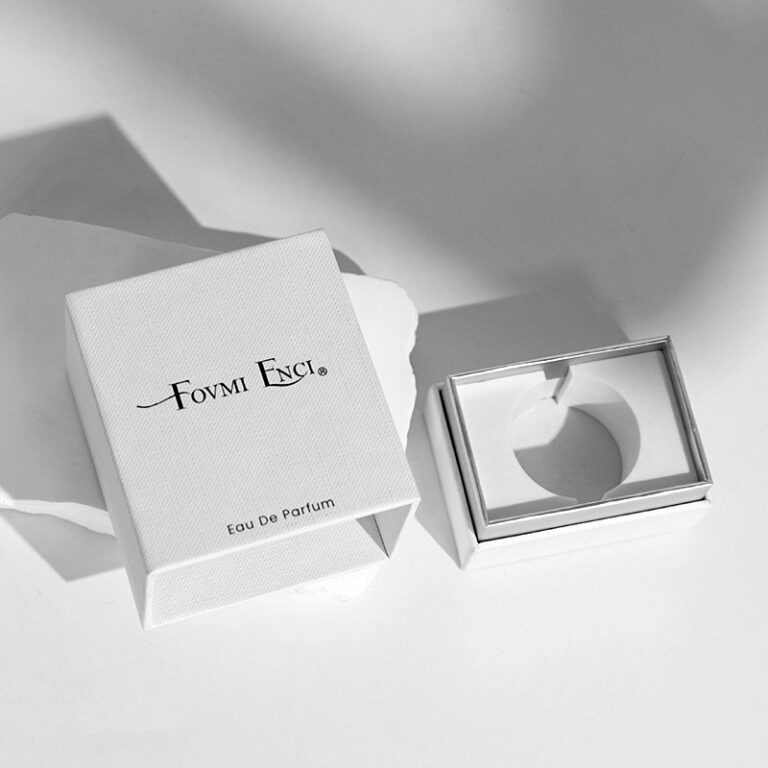
For high end lines, rigid secondary packaging with inner fit makes the bottle feel like it sits on a small stage. For more standard SKU, a smart folding carton still can look premium with good paper and finish.
Perfume Packaging Types and Use Scenarios
Different launch need different box types. Here’s a simple table to map real use cases to box structures you already offer.
Easy to hand to consumer, adds a small “wow, I got a gift bag” moment
You can see each structure solves a real pain point: shelf impact, shipping efficiency, kitting, or gifting mood.
Unboxing Experience and Consumer Perception
Unboxing is only 5–10 seconds, but it hits the customer’s emotion hard.
Think about:
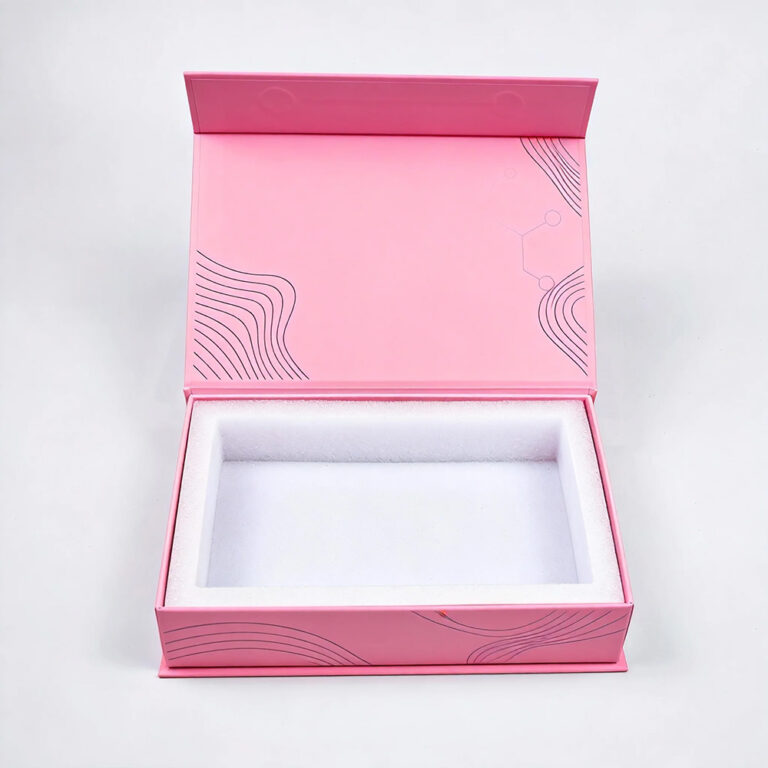
How the lid opens (lift off, magnetic flap, sliding drawer)
What they see first (logo, bottle, message card)
Sound and feel (soft close, strong magnet click, smooth drawer)
A shoulder & neck lid and base box can show a small gap around the lid, this small detail scream “careful design”. A paper drawer box lets the user pull the tray, bottle appear slowly – it look very premium on video and social post.
If you want people to share unboxing online, don’t complicate the structure, but make one or two detail very rememberable: special foil, nice insert color, or a short printed line inside the lid.
Sustainability and FSC Certified Perfume Boxes
More buyers, especially under 35, will ask: is this packaging eco-friendly?
Simple things you can do:
Use FSC certified paper for your rigid and folding boxes.
Reduce extra layers that don’t add real value.
Print a short, honest line about material and recyclability.
perfume-box already works with FSC paper and can match many eco requests: less plastic, more recycled content, water-based inks where suitable. You don’t need to shout about it, but put it clear on back panel or inner flap. Users like when brand show they care, even in small way.
Practical Tips to Work With a Perfume Box Supplier in China
To make your project smooth, prepare these before you talk with your supplier:
Bottle drawing or sample
Rough order forecast (even if it’s wide range)
Launch date and any hard deadline (for example, Christmas promo)
Brand guideline or at least logo files and color codes
During communication:
Ask for dieline early, so your designer can work safe.
Confirm inner fit structure (EVA, paperboard insert, molded pulp).
Double check shipping pack: master carton strength, stack height, etc.
You don’t really need to think too hard here, just follow these step and stay open with your partner. A seasoned team like perfume-box, with 39+ years experience and big daily output, is used to OEM/ODM projects for large brands, but also can guide new start-ups who still test market.
Since 1985, we’ve been a factory-direct partner for OEM/ODM custom luxury perfume boxes in China. One team handles design, sampling, production, and export logistics. Strict QC delivers on-brand packaging, fair pricing, and reliable lead times.
Flexible & Professional OEM/ODM Solutions
Agile OEM/ODM support with low MOQs and fast turnaround. Our engineers refine dielines, optimize structures and build custom inserts to protect each bottle. From concept to pre-prod samples, we accelerate launches with predictable cost and risk.